Studio in Writing & Multimodal Composition
Updated: Sep 22, 2025
University of Connecticut, Storrs, CT
Fall 2023 - Spring 2024
Average 30-35 students per section, total of 3 sections

Course Introduction
This course explores digital composition and multimodal storytelling—how ideas move beyond print into interactive, visual, and networked spaces—and invites students to see writing and communication as a creative, iterative process that extends well beyond traditional text. Students learn to design and curate accessible, ethically produced, and visually compelling digital texts, using a range of tools and platforms to express ideas, build professional identities, and engage with social and cultural issues such as health, identity, and contemporary concerns. Through hands-on projects in remix culture, accessibility, digital citizenship, curation, and usability testing, they develop both critical understanding and practical design skills. By the end of the semester, each student produces a professional, public-facing portfolio that showcases technical ability, personal voice, and the capacity to connect individual expression to wider audiences.
Unique Course Dimension
This first-year requirement course introduces students from across the university—business, liberal arts, sciences, music, sports, and more—to the principles and practice of digital composition and multimodal communication. About 35 students enrolled in each section, and I taught three sections per semester, working in collaboration with the ENGL 1007 seminar component.
Teaching a class of first-year students from diverse majors and interests means creating an inclusive, low-barrier environment where students with different levels of digital experience can thrive. The course is designed to help students develop professional communication skills while encouraging them to express personality, personal interests, and social concerns through digital media. It provides an early foundation for professional readiness and helps students see how digital storytelling and design can communicate across disciplines and cultures.
This course adopts a studio-based approach where the classroom functions as an active workspace for making, critiquing, and revising, supported by peer feedback and one-on-one mentorship. Students develop critical digital literacy by composing across text, image, sound, and interactive media, becoming makers rather than mere consumers of digital culture. Aligned with UConn’s Common Curriculum in Information, Digital, and Media Literacy, the course cultivates habits of collecting, curating, engaging, contextualizing, theorizing, and circulating, enabling students to share knowledge and create projects that reach diverse audiences and participate in broader cultural conversations.

Course Structure
Each class meeting blends short lectures, hands-on demonstrations, and studio work time.
Foundations & Demonstrations: Introduce key concepts and technical skills.
In-Class Studio Work: Students apply techniques immediately to their own projects.
Critique & Feedback: Peer reviews and one-on-one sessions guide iterative improvement.
Touchpoint Tasks: Low-stakes weekly exercises scaffold skills and prepare students for major projects.

Course Outline
Module 1: Remix Part 1
• Introduction to remix as quotation, parody, and cultural commentary
• Explore multimodality and begin Remix Portfolio Project
Module 2: Designing for Accessibility
• Universal Design & inclusive communication
• Apply design principles for accessible digital texts
Week 3: Remix Part 2
• Collect and ethically use media assets
• Apply information architecture to build the Remix draft
Module 4: Digital Citizenship
• Responsibilities and privileges in online spaces
• Craft an “About Me” page and define your digital identity
Week 5: Curation
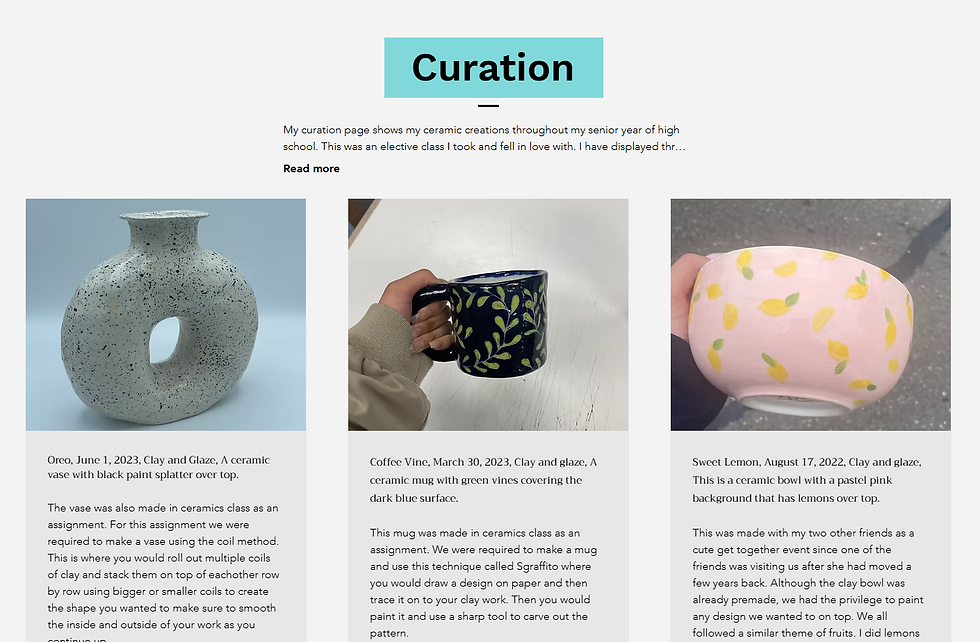
• Select and arrange artifacts to tell a professional story
• Compose a curator’s note and refine your portfolio
Week 6: Usability Testing & Finalization
• Conduct peer usability tests
• Revise and launch the Exhibition Portfolio
Key Deliverables
Five Major Projects:
Studio Activities & Remix Portfolio
About Me Page
Curation Project
Circulation Reflection
Final Exhibition Portfolio
Touchpoint Tasks (1-12): weekly assignments to support each module

Learning Outcomes
By the end of the course, students will be able to:
Design and evaluate multimodal texts for diverse audiences.
Integrate principles of accessibility, ethical remixing, and digital citizenship.
Apply information architecture and usability testing to improve digital projects.
Curate and present a professional online portfolio demonstrating critical and creative engagement with digital media.
Student Works Preview


Comments